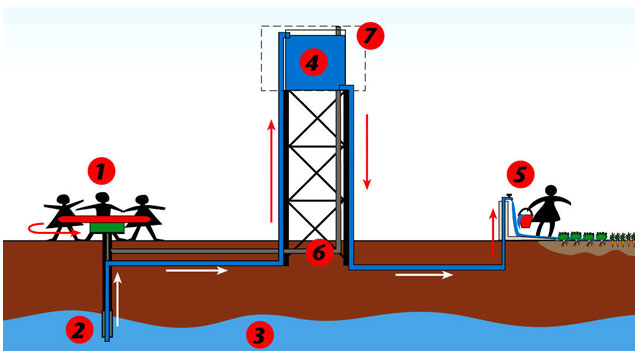
Clean water is a problem for some countries, mainly in Africa. In my last post about water there is a link to a documentary called FLOW. For 4 or 5 seconds a guy mention something about a playpump. So I decided to know a little bit more about that idea. Roundabout Water Solutions, who has an agreement with the South African Department of Water Affairs and the Governments of Malawi, Lesotho and Swaziland, is raising donor funds to supply rural communities, with clean drinking water, by means a sustainable pumping system, called a PlayPump, that is powered by the play of children.
PlayPump
Ideas like that to help small communities are more than welcome as in How Solar Energy Empowered a Nicaraguan Community Once Devastated by War. However there are some disadvantages as mentioned by this report released by UNICEF in 2007. For example the pumps cost around $14 000 which are more expensive than traditional pumps. Also a Playpump could theoretically provide the bare minimum water requirements for about 200 people a day based on two hours’ constant “play” every day[1]. It is a great idea but it is not to solve to problem the intention is to mitigate it. Of course the costs should be lower than that.
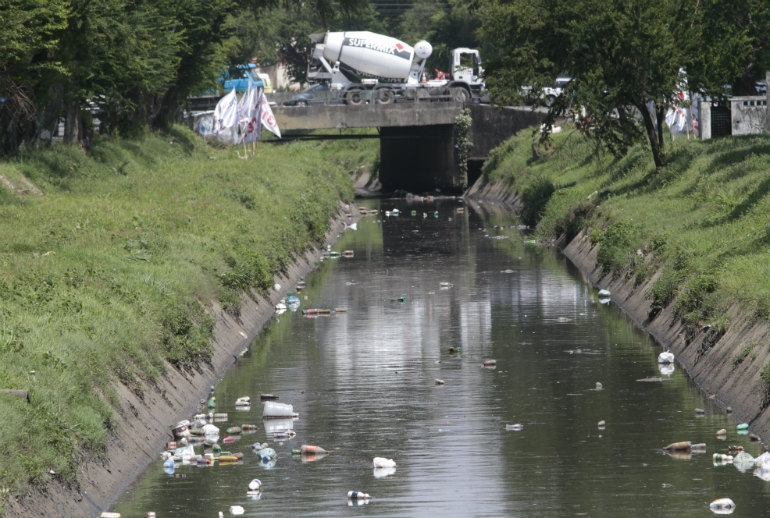
Do you remember the post about China and Brazil water pollution? The newspaper which before reported the problem returned to the same place 10 months later . Do you want know how is the place now? Take a look:
Image Credit: Guga Matos/ JC Imagem
For me what is more disturbing are the flags on the sides. The flags are electoral propaganda. Yeah it is time for new elections. The candidate paid someone to put the flags there because it is a really busy area.
Image Credit: Guga Matos/ JC Imagem
Is this a poor place? Well, it is hard to say because it was one of the host cities during the world cup. World cup host cities are not chosen randomly. They are normally big cities with infrastructure. Yes, there is infrastructure. Just take a look at the stadium they built for the world cup called arena pernambuco:
Arena pernambuco. Foto credit: Sergio Dutra.
Arena pernambuco. Foto credit: Portal da copa
What? It doesn’t make any sense. In addition one of the biggest soccer stadiums in Brazil is located not only in the same city but in the same neighbourhood of the polluted water channel.
Arruda Stadium. Image credit: Jrnicolas
However the stadium didn’t fit in the fifa standard so the government decided to build a new one (instead of renovate the old big stadium) . Stadiums and world cup are the priorities now of the governments but in the future when water will be a value commodity the priority is likely to change. Check this documentary called FLOW for love of water:
Irena Salina’s award-winning documentary investigation into what experts label the most important political and environmental issue of the 21st Century – The World Water Crisis. Salina builds a case against the growing privatization of the world’s dwindling fresh water supply with an unflinching focus on politics, pollution, human rights, and the emergence of a domineering world water cartel. Interviews with scientists and activists intelligently reveal the rapidly building crisis, at both the global and human scale, and the film introduces many of the governmental and corporate culprits behind the water grab, while begging the question “CAN ANYONE REALLY OWN WATER?”
That’s what I first heard. It is clean because it does not release CO2. Indeed, nuclear power plants produce energy without the releasing of large CO2 amount but is it really clean? I tried to learn a bit more about the topic. I won’t get into the details about how nuclear power is generated, I think this wikipedia text does a good job explaining how it works:
Just as many conventional thermal power stations generate electricity by harnessing the thermal energy released from burning fossil fuels, nuclear power plants convert the energy released from the nucleus of an atom via nuclear fission that takes place in a nuclear reactor. The heat is removed from the reactor core by a cooling system that uses the heat to generate steam, which drives a steam turbine connected to a generator producing electricity.
So the key factor is basically the nuclear fission:
nuclear fission is a process in which the nucleus of an atom splits into smaller parts. The fission process often produces free neutrons and photons (in the form of gamma rays), and releases a very large amount of energy even by the energetic standards of radioactive decay.
An induced fission reaction.
The products of nuclear fission are on average far more radioactive than the heavy elements which are normally fissioned as fuel (for example Uranium), and remain so for significant amounts of time. Thus, is it nuclear energy safe? The world had 434 operable reactors with 66 others currently under construction. Statistically, considering the number of reactors and number of accidents, nuclear power plants are not really unsafe. Well, statistics is powerful and should be used carefully. Each nuclear accident could represent environmental concerns of hundreds of years (maybe thousands depending of the element and nuclear decay process). Therefore, only one accident can lead to catastrophic environmental consequences.
I started watching a movie about the Chernobyl accident and then I found more documentaries including nuclear power accidents, nuclear footprints and nuclear waste. It was an amazing journey. I hope these movies help you to understand more about this technology which is amazing but at the same time scary. Personally, after all these movies I though: “Wow, coal energy is kind of cleaner when compared to nuclear energy.”. It is important to mention there is a debate about the use of Thorium instead of Uranium or Plutonium in the nuclear power plants. The claim is that Thorium is cheaper, safer and also abundant. Well, soon we will see the reality of these claims.
Into Eternity
This wasn’t the first movie that I saw about the topic but it was the most impressive for me. It was for me the scariest because of the time-dimension of the problem and the solution. 100,000 years. Wow, 100,000 years!
Every day, the world over, large amounts of high-level radioactive waste created by nuclear power plants is placed in interim storages, which are vulnerable to natural disasters, man-made disasters, and to societal changes.
In Finland the world’s first permanent repository is being hewn out of solid rock – a huge system of underground tunnels – that must last 100,000 years as this is how long the waste remains hazardous.
Once the waste has been deposited and the repository is full, the facility is to be sealed off and never opened again. Or so we hope, but can we ensure that?
And how is it possible to warn our descendants of the deadly waste we left behind? How do we prevent them from thinking they have found the pyramids of our time, mystical burial grounds, hidden treasures? Which languages and signs will they understand? And if they understand, will they respect our instructions?
While gigantic monster machines dig deeper and deeper into the dark, experts above ground strive to find solutions to this crucially important radioactive waste issue to secure mankind and all species on planet Earth now and in the near and very distant future.
Is Nuclear Energy Safe? Nuclear Energy Risks and Consequences
Three Mile Island, Chernobyl and Fukushima: This original Earth Focus investigative report looks at the untold stories behind three of the world’s largest nuclear disasters.
Discovery Channel – The Battle of Chernobyl (2006)
This documentary analyzes the Thursday 26th April 1986 when one of the reactors at the Chernobyl nuclear power station in northern Ukraine, exploded. The plant, just 20 km away from the town centre, was made up of four reactor units each generating an output of 1,000 megawatts. The reactor in question exploded due to operational errors and inadequate safety measures and the meltdown was directly linked to routine testing on the reactor unit’s turbine generators.
More than 200 people died or were seriously injured by radiation exposure immediately after the explosion. 161,000 people had to be evacuated from a 30 kilometer radius of the reactor and 25,000 square km of land were contaminated. As time went on millions of people suffered radiation related health problems such as leukemia and thyroid cancer and around 4,000 people have died as a result of the long-term effects of the accident.
Nobody was prepared for such a crisis. For the next seven months, 500,000 men will wage hand-to-hand combat with an invisible enemy – a ruthless battle that has gone unsung, which claimed thousands of unnamed and now almost forgotten heroes. Yet, it is thanks to these men that the worst was avoided; a second explosion, ten times more powerful than Hiroshima which would have wiped out more than half of Europe. This was kept secret for twenty years by the Soviets and the West alike.
Uranium – Is It A Country? Tracking the Origins of Nuclear Power
This is a documentary that takes a look at the footprints of nuclear energy. In Europe nuclear energy is more and more often celebrated as saving the climate. Clearly, nuclear power plants need uranium.
The aim is to comprehensively illustrate the opportunities and risks posed by nuclear energy, whilst paying particular attention to uranium mining. Australia has the world’s largest deposits of this resource. They go to the “land down under” to exemplify where uranium comes from, where it goes to and what is leftover from it.
The Fukushima Nuclear Accident
Examines the incident, aftermath and implications for the adoption of Nuclear energy in other countries. From ‘Four Corners’, an Australian investigative program on the ABC.
I was writing a post about nuclear energy when an environmental accident happened in British Columbia, Canada. So I decided to postpone for one more week the nuclear energy post to make a comment about the accident. First this is what happened.
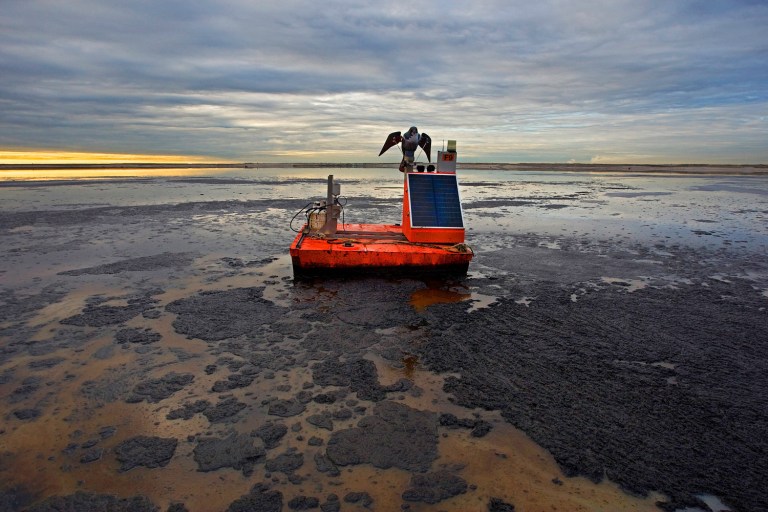
In 04/08/2014 a copper-gold mine wastewater spilled into creeks, lakes, and flowed into central B.C. river systems. Debris and effluent flowed into a lake from the tailings pond, where waste from the mine’s chemical and mechanical operations was being stored. The wastewater and tailings sediments has contaminated several lakes, creeks and rivers in the region. Approximately 10 billion litres of water and 4.5 million cubic metres of metals-laden fine sand has been released. This is so big that I can’t even pay attention on the numbers. Because of that, a complete water ban has been issued for the interior community of BC. Therefore, the water is not appropriate for drink, swim, etc.
Image credit: Cariboo Regional District/Facebook
The company said:
.. the tailings are not acid-generating and the water is alkaline with a pH of roughly 8.5, but it could not confirm the exact quantity and composition of the discharged wastewater.
Honestly a statement like “tailings are not acid-generating…” is ridiculous. On the next day dead fish and devastation were spotted in the region. It is only the beginning because Mount Polley mine tailings pond breach followed years of government warnings. They had 5 warnings in 14 inspections. What???? No, not in Canada, a first world developed country. But Indeed, it is true. Negligence? Inaction? Is It really hard to explain. Well, disasters like these often spawn comments calling for the immediate shutdown of all mines, forestry and industry. Is it the solution? Just, remember, in general we need the products that the raw materials from these industries provide to manufacture computers, tvs, cellphones, tablets, cars, etc. Also they provide employment, revenue and taxes that pay for the majority of health care and education. Ops, this is getting complicated.
Image Credit: Gary Zorn/Ecotours-B.C
To find solutions for the problem is not really easy because the governments are dependent of these industries and vice-verse. However i have a theory. My theory is recycle more and waste less (???). Well, but think about it. I blogged before about waste and consumption.These companies are necessary because our lifestyle. Would you give up of your actual lifestyle? Should we revert to a simple life of ride horses? How about eat fruits and share fish with the bears? I doubt it. However these companies are driven by demand and supply. If we start to recycle more and waste less the demand will decrease, so some of the companies won’t be more necessary. Ok if the population doesn’t grow, etc, etc, remember the problem is not that simple.
Do you remember that old computer sitting on the garage? Or that old cellphone? I can guarantee that both have some amount of the same material that is byproduct of Mount polley mine. I know, the amount are really small, but normally these products go to normal garbage to be buried or burned. That is the part which doesn’t make sense to me. Why burn something that can be used again? How about the jobs, revenues, taxes? I think this could be re-allocated to recycling companies, or companies that recycling our waste. It is only a theory. Far from the truth. We have to be realistic and accept that we live in a waste culture. Unfortunately, I believe that zero waste is not possible, but I also believe that we can reduce the waste drastically and respect more the environment. These are small steps but with big consequences.
NASA successfully launched its first spacecraft dedicated to studying atmospheric CO2. Orbiting Carbon Observatory-2 (OCO-2) will be NASA’s first dedicated Earth remote sensing satellite to study atmospheric carbon dioxide from Space. OCO-2 will be collecting space-based global measurements of atmospheric CO2 with the precision, resolution, and coverage needed to characterize sources and sinks on regional scales. “Sources and sinks” are the keys words here. As I posted before, when CO2 is added in the atmosphere only a part stays in there (which drives warming). The remained part could be absorbed by the ocean, and land. However, exactly where is highly uncertain. Thus this sensors will help to solve this part of the puzzle. Also OCO-2 will also be able to quantify CO2 variability over the seasonal cycles year after year.
Due the lack of time I am not writing long topics anymore, but as soon as I can I’ll return to the normal posts. Meanwhile here are some (late) news of the week.
Scientists have discovered a frozen underworld beneath the ice sheet covering northern Greenland. The previously unknown landscape, a vast expanse of warped shapes including some as tall as a Manhattan skyscraper, was found using ice-penetrating radar loaded aboard Nasa survey flights. Well, what does it mean? It means that the findings could deepen understanding of how the ice sheets of Greenland and Antarctica respond to climate change. There is a brief explanation of how this underworld could influence the melting of the ice sheet in the part three of the documentary I posted here a few weeks ago The climate wars.
Climate scientists carry the biggest burden of all: they know our planet is going to turn into a reheated chicken nugget and no one has really been listening. Click in the picture and check the cartoon.
If you are watching World Cup games and predicting which teams will win matches, might I suggest that you take into account the climate where matches are played. Brazil is huge, spanning about 40 degrees of latitude, and includes ten different climates. Continue reading
The idea is simple. Fact 1:Plants reduce CO2 in the atmosphere trough photosynthesis. Fact 2: Increasing CO2 in the atmosphere stimulates plants growth. Thus fact 1 + fact 2 is the perfect scenario. If there is more CO2 in the atmosphere and plants are growing more because of that, the solution to global warming is to plant more trees right? Well not really. There is a missing piece called Carbon cycle.
Sometimes I am surfing on the internet and I find something interesting. I like to discuss more the topic but due lack of time I can not. So for now on, I’ll try to write a short post (probably on Fridays) with some interesting environmental random news like these:
A new billboard in Calgary claims: “The sun is the main driver of climate change. Not you. Not CO2.” Well I am Ok if someone says that we don’t really know if humans are causing the global warming, but blaming the sun? That is not cool. The best part is the name of the organization: http://friendsofscience.org/
Brazil is the host country of the 2014 FIFA World Cup. As thousands of tourists are arriving and the country is preparing for one of the world’s major sporting events, drought is affecting Brazil’s water availability and electricity generation in the Northeast and Southeast regions.Continue reading
In 2008 the BBC released a documentary called Earth – The Climate Wars. In this 3 part television documentary the Scottish geologist Dr. Iain Stewart covers some aspects of the theory about global warming, the battle between the scientists who believe that climate change is caused by humans and the sceptics scientists, and challenge of predict the effects of global warming. It is a really good documentary.
In the first episode Dr Iain Stewart traces the history of climate change from its very beginning and examines just how the scientific community managed to get it so very wrong back in the Seventies. Along the way he uncovers some of the great unsung heroes of climate change science, as for example the secret organisation of American government scientists, known as Jason, who wrote the first official report on global warming as far back as 1979. He shows how – by the late 1980s – global warming had already become a serious political issue. It looked as if the world was uniting to take action. But it turned out to be a false dawn. Because in the 1990s global warming would be transformed into one of the biggest scientific controversies of our age. Continue reading






 Spider X bass