Does ‘Being Green’ Mean ‘Saving Money’? Well, Not always….

It is not new that plants help the environment, but I’ve been trying to read more news on the internet about helping the environment in general and I must confess that I am bored. If you google any site talking about environment you will find someone talking about climate change and CO2 and another one saying that CO2 is not causing climate change. It is like have your own soccer team or political party, it is not science any more. Look this article talking about green roofs. This article talks about the advantages and disadvantages (including costs and maintenance) of the roofs (which are not cheap by the way). However, there is one last part in the last line where it says something about “cooling the planet”. Damn it! You go to the commentaries and global warming this, CO2 that. Sometimes you can find even more radical ideas as we should not eat meat because the carbon footprint. Ok, yeah, we should also breath less to release less CO2 and we also should hold our farts because of the releasing of methane (another and even more powerful greenhouse gas). So, are we missing the point? Could we please focus on the benefits versus disadvantages of green roofs? Are we saving the planet using a green roof? I doubt it. However it is an interesting idea, and could be applicable considering the costs/maintenance. They need to be adapted to each place and situation  and of course for some places they can’t be economically viable because they probably need more maintenance than traditional roofs. So a balance must exist.

Credit: Arild Vågen – Own work

Another interesting idea is the use of rain gardens to help the runoff problem. Runoff is the portion of rainfall, snowmelt, and/or irrigation water that runs over the soil surface toward the stream rather than infiltrating into the soil. Each soil type has an infiltration rate (the amount of water able to enter the soil in a specified time period) and infiltration capacity (the upper limit of infiltration rate). However in urban areas the infiltration rate could be close to zero because of the impervious areas (roofs, driveways, parking lots, pavements, compacted soils). Consequently the runoff in urban areas is large and it is a major component of flash floods. In addition runoff flows can pick up soil contaminants such as petroleum, pesticides, fertilizers, trace metals, etc.

The rain gardens capture the initial flow of storm water and reduce the accumulation of toxins flowing directly into natural waterways. Thus the stormwater soaks into the ground instead of flow directly to storm drains.  In addition, they help to control erosions due the excessive runoff. Similarly to green roofs, rain gardens have to be adapted to place and situation. For example, native plants are recommended (for both) because they are more tolerant of one’s local climate, soil, and water conditions.

A place which has a rain garden and a green roof is more environmental friendly and it is also helping to save the world, right? Well, it is important to remember the costs and maintenance of these products. Be green does not mean cheap or easy. However the advantages of green roof and rain garden such as energy savings, runoff and pollution reduction, temperature control should also be considered. Maybe you won’t save the world but you can save a few bucks and have a better lifestyle. Besides, it is St. Patrick’s day, so green is the official color.

More about:

http://en.wikipedia.org/wiki/Rain_garden

http://en.wikipedia.org/wiki/Surface_runoff

http://www.riversides.org/rainguide/riversides_hgr.php?cat=2&page=39&subpage=92&subpage2=45

http://en.wikipedia.org/wiki/Green_roof

http://commons.bcit.ca/greenroof/information-and-resources/backgrounders/

http://www.greenroofs.com/TV.htm

How is Artificial Intelligence Helping the Environment?

Recently, one of the most intelligent man alive, the theoretical physicist Stephen Hawking, said in an interview: “The development of full artificial intelligence could spell the end of the human race.”. Should we be afraid of Artificial intelligence (AI) because the machines could take over the human race (similarly to the terminator)? For the environmental science point of view, AI so far has been really helpful. First what is AI? There are different definitions, but one of my favourites is:

[The automation of] activities that we associate with human thinking, activities such as decision-making, problem solving, learning…
(Hellman 1978)

Thus, it is basically the use of machines (e.g. computers) to solve problems and to help complex decisions. There is a branch of AI called machine learning (ML). It is a scientific discipline which studies computational algorithms that can learn from data. One of the applications of the ML algorithms is to use some particular data to perform classification and numerical regression. But how is ML helping the environment?

Satellites (remote sensing) generate thousands of data every day. Images around the globe with different frequencies band (infrared, microwave, visible to the human eye, etc), time and scales. But How useful can be those images? One example is to detect phytoplankton in the ocean. Phytoplankton are important components to sustain the aquatic food web. The importance of them is beyond of being food for krills. Accurate estimates of chlorophyll concentrations (consequently phytoplankton) are essential for estimating primary productivity, biomass, etc.

Image Credit: NASA

Image Credit: NASA

It is possible to use satellites to detect phytoplankton presence in the ocean due the concentration chlorophyll in the surface water. Each frequency channel has a purpose. For example, at certain wavelengths, sand reflects more energy than green vegetation while at other wavelengths it absorbs more (reflects less) energy. However, even using satellites this is not a easy task. Aerosol concentrations could affect the ocean colour viewed from the satellite. Further complications arise when there are also suspended sediments,and/or dissolved organic matter from decayed vegetation in the water. In addition coastal water quality gradually degrades from increased pollution and human activities. To overcome those problems, ML algorithms such as artificial neural networks and support vector machines are used to automatically classify (separating chlorophyll from aerosols, pollution, etc) and detect the presence of phytoplankton in the ocean.

Credit: Nasa

It is also possible to use remote sensing to classify and detect land cover applying the same algorithms to identify and classify different types of vegetation including forests, dead trees in the forest, forest fires, portion of regenerated trees after forest fires, etc. With accurate information is possible to avoid more deforestation, track urbanization, mitigate diseases, understand and control ecosystems, planning, etc.

asfd

These are only small samples of how AI is used in environmental sciences. There are so many contributions that is unfair to give only a few examples about the topic.

More about:

http://earthobservatory.nasa.gov/Features/RemoteSensing/remote.php

Sources:

William Hsieh (2009). Machine Learning Methods in the Environmental Sciences Cambridge DOI: 10.1017/CBO9780511627217

Keiner, L., & Yan, X. (1998). A Neural Network Model for Estimating Sea Surface Chlorophyll and Sediments from Thematic Mapper Imagery Remote Sensing of Environment, 66 (2), 153-165 DOI: 10.1016/S0034-4257(98)00054-6

Schiller, H., & Doerffer, R. (2005). Improved determination of coastal water constituent concentrations from MERIS data IEEE Transactions on Geoscience and Remote Sensing, 43 (7), 1585-1591 DOI: 10.1109/TGRS.2005.848410

Dash, J., Mathur, A., Foody, G., Curran, P., Chipman, J., & Lillesand, T. (2007). Land cover classification using multi‐temporal MERIS vegetation indices International Journal of Remote Sensing, 28 (6), 1137-1159 DOI: 10.1080/01431160600784259

Changing Ecosystems for the Good. Another Glimpse of Hope

Fact: Humans are changing the world and our landscape and consequently some ecosystems. Is it good or bad? I must admit, my last posts are not really encouraging. We are changing our landscape more for the bad. Sometimes I am searching the internet and then I find hope. After a beautiful ecosystem being totally changed to an infertile ground, Is it possible to rehabilitate it? In Green Gold environmental film maker John D. Liu documents large-scale ecosystem restoration projects in China, Africa, South America and the Middle East, highlighting the enormous benefits for people and planet of undertaking these efforts globally.

I couldn’t believe. It is true! This movie proves if humans want to they can do amazing things for the good. I’d like to see more projects like that. I have more links, I will try to read more about it and post here.

The Chaos of Weather

After a long break I am finally back. This is the first post of the “Weather Forecasting” posts. Roughly speaking, to forecast the weather, scientists use computer models to mimic Earth dynamics. These models are mathematical equations of the atmosphere and oceans. However, the Earth dynamics is a big complex system. On top of that some Earth natural systems have a chaotic behavior. But what is chaos? Summarizing the wikipedia definition:

Chaos is when the behavior of dynamical systems are highly sensitive to initial conditions. Thus, small differences in initial conditions (such as those due to rounding errors in numerical computation) yield widely diverging outcomes for such dynamical systems. Therefore, chaotic systems are predictable for a while and then appear to become random. In other words, the deterministic nature of these systems does not make them predictable.

Around 1960, the meteorologist Edward Lorenz (one of the fathers of chaos theory), was working on a set of differential equations describing convective processes in the atmosphere which were producing encouragingly realistic results. One day, he decided to enter data manually from a point part way through rather than waste time by starting the run over. He found that not long after the run had been restarted from this intermediate point, the forecast diverged and it was completely different. The reason behind, was the output data he used to restart the model. It had been rounded to 3 significant digits, while the computations were done to 6, an error of about 1%. With this unexpected results he discovered that the degree of numerical precision in the initial conditions provided to a numerical weather prediction (NWP) model affects the resulting forecast significantly after only a few days of forecast time (Lorenz 1963).  A good example (also from wikipedia) of chaotic behavior  is the double rod pendulum where the start of the pendulum from a slightly different initial condition would result in a completely different trajectory:

Double-compound-pendulum.gif
Double-compound-pendulum” by CatslashOwn work. Licensed under Public Domain via Wikimedia Commons.

The Earth weather is one of the Earth natural systems with a chaotic behavior. Consequently, the use of different initial conditions in the atmospheric and oceans equations will lead to different final results. So why does not use the same initial condition always to forecast the weather and have the same results? The source of the errors in the forecasting is a more complex subject and I will explain in a post later. However if the Earth system is so unpredictable how come scientists can use computer models to reconstruct past and future climate? First it is necessary to explain the difference between weather and climate where the difference is a measure of time. Weather is what conditions of the atmosphere are over a short period of time, and climate is how the atmosphere “behaves” over relatively long periods of time. Weather is more difficult to predict and has more uncertainties than climate. An elegant demonstration of this difference can be seen in this short video from National Geographic. The astrophysicist and Cosmos host Neil deGrasse Tyson uses a dog walking to clarify the concept.

More additional information of computer models and how they are used to predict climate can be found here: Can we trust climate models?  and Numerical weather prediction.

Changes in the Water Cycle Expected with Climate Change. Are We Doomed?

Everybody know we are evolving as human beings. Is this true? When I see how clean water has being handled I have some questions. More than a billion people across the globe don’t have access to safe water. Every day 3900 children die as a result of insufficient or unclean water supplies. The situation can only get worse as water gets ever more scarce. The world without clean water. How many times I’ve heard that. The humankind is polluting, wasting, diverting, pumping, and degrading the clean water that we have. On top of that, water has being privatized. Why? Because is becoming rare and only what is rare is valuable! The rampant over-development of agriculture, housing and industry increase the demands for fresh water well beyond the finite supply, resulting in the desertification of the earth. There are companies now saying why don’t we bottle it, mine it, divert it, sell it, commodify it. Corporate giants force developing countries to privatize their water supply for profit. Wall Street investors target desalination and mass bulk water export schemes. Corrupt governments use water for economic and political gain. Military control of water emerges and a new geopolitical map and power structure forms, setting the stage for world water wars. The following two documentaries show how the problem is affecting countries in the world. It is interesting how two documentaries show the same topic. They complement each other.


So, why can we be friends with nature? Is there any hope? According with this recent paper from nature climate:

Adaptation of water resources management will help communities adjust to changes in the water cycle expected with climate change, but it can’t be fixed by innovations alone.

The paper talks about the Pangani River, where the Tanzania Electric Supply Company has three hydropower plants. There, climate change is affecting the water cycle, changing precipitation amounts and droughts duration which is altering the way farmers, pastoralists and Tanzania’s energy company are managing water. All over the world new techniques and planning have been developed. The urban and rural development plans (sometimes) are moving away from large, static projects by combining sustainable approaches of engineering and ecology.

For the Pangani River, leaders adjusted water allocation policies with the changing needs of the communities. Still, they made water availability for ecosystems a main priority by maintaining at least a minimum flow of water to wetlands, riparian forests and mangroves to provide water for wildlife including fish, plants for medicinal use, timber and fruits, for example. Then, as the region’s population swelled, water uses for urban city centres were balanced with the needs of subsistence farmers, pastoralists and the Tanzanian energy company. That same kind of flexibility is the hallmark of the new thinking on water management. Rather than relying on large, long-lived concrete infrastructure, often built all at once and designed based on historical climatic conditions.

It makes sense. Rather than isolating water management issues within a single field, such as engineering or hydrology, the team to solve these problems should include economists, hydrologists, policymakers and engineers. Solutions have been proposed such as the redesigning of water treatment plants that can accommodate extreme rainfall, and the adding of city orchards and grassed bio-swales (which resemble marshy depressions in the land) to slow the flow of storm water from sidewalks. They will act as green sponges all over the city. Thus the water gets soaked up avoiding pumping every time it rains.

Another good example comes from Japan where it is possible to be sustainable (of course I am not talking about the Japanese nuclear power stations). Over centuries they reshaped the land where people and nature could remain in harmony. For the Japanese, it is important that they have a special word for it, satoyama, villages where mountains give way to plains. The satoyama landscape is a system in which agricultural practices and natural resource management techniques are used to optimize the benefits derived from local ecosystems. In the Satoyama villages, each home has a built in pool or water tank that lies partly inside, partly outside its’ walls… A continuous stream of spring water is piped right into a basin, so freshwater is always available. People rinse out pots in the tank and clean their freshly picked vegetables. If they simply pour the food scraps back in the water, they risk polluting the whole village supply. However, carps do the washing up there scouring out even the greasy or burnt pans. Cleaned up by the carp, the tank water eventually rejoins the channel. This documentary talks about the Satoyama villages:

In the Satoyama villages the products obtained (including food and fuel) help safeguard the community against poverty, but without degrading the land, water or other resources. Of course documentaries have a bias towards the ideas which they want to show but can you spot the difference? Also, is water public or private? Am I saying no more bottled water? Am I saying everybody should live in a Satoyama village? No. However I balance must exist between extraction and use. We need to reinvent ourselves.

Do you have anything to say? I’d like to hear your opinion.

More information:

http://satoyama-initiative.org/

http://onlinelearning.unu.edu/en/the-satoyama-initiative/

Click to access e_satoyama_pamph.pdf

Journal References:
Palmer, L. (2014). The next water cycle Nature Climate Change, 4 (11), 949-950 DOI: 10.1038/nclimate2420

Dr. Agr. Kazuhiko Takeuchi,Robert D. Brown Ph.D., Dr. Sci. Izumi Washitani, Dr. Agr. Atsushi Tsunekawa, Dr. Agr. Makoto Yokohari (2003). Satoyama, The Traditional Rural Landscape of Japan Springer Japan DOI: 10.1007/978-4-431-67861-8

Weather Forecasting: Is it better to toss a coin?

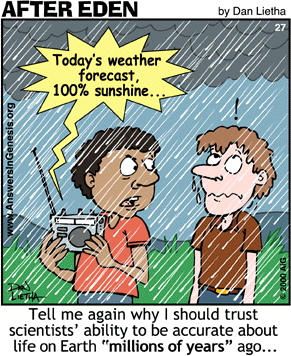
Why Is Weather Forecasting Always Wrong?  Have you asked yourself the same question? Have you cursed the weather forecasting when you were expecting a sunny day and then rained? Does this picture looks familiar?

tempoeficaz

Once I was in Toronto when the forecasting for the other day was a blizzard. Basically, lots of snow. When that day finally arrived we had half of the expected snow. I friend of mine said: “It is the government. They say more snow will fall than what is expected to scare the people.” Well at that time my knowledge about weather and atmospheric science was minimal. I did not know what to think. Is my friend right? Is the government really doing this? What is the real reason behind? Are the guys responsible for the weather forecasting incompetents? A few years ago i did a seminar giving a brief explanation of how hard is to predict weather. Unfortunately the slides do not come with detailed information. Thus, to answer some questions about weather forecasting I will do a series (not consecutive) of posts explaining why weather is so hard to predict. In addition I will try to give an overview of  how it is predicted. I will add the posts under the category ¨Weather Forecasting”.

To explain the whole weather forecasting problem it is really hard, almost impossible. For example:

Despite the detailed knowledge about precipitation including the complete hydrological cycle (evaporation, water vapour, convection, condensation, clouds, soil moisture, groundwater and the origin of rivers), predicting precipitation accurately is still one of the most difficult tasks in meteorology (Kuligowski:1998)

I know the paper is old but the problem persists. Even in 2014 precipitation still a major forecasting challenge. Some of the reasons are:

  • The chaotic nature of the atmosphere and the complexity of the processes that are involved in precipitation
  • The difficulties of precipitation measurements including problems with rain gauges, radar and satellites
  • The limited temporal and spatial scales of numerical weather prediction (NWP) models?

My goal is to provide information about the most important parts of the weather forecasting. Of course at the end of the posts, if I am missing something please let me know but I hope my posts will be enough to anyone know that the scientists are doing a really good job and they are really hard work guys and if they are missing is not because conspiracy or incompetence. It is because the problem is really hard.


Journal references:

Kuligowski, R., & Barros, A. (1998). Localized Precipitation Forecasts from a Numerical Weather Prediction Model Using Artificial Neural Networks Weather and Forecasting, 13 (4), 1194-1204 DOI: 10.1175/1520-0434(1998)0132.0.CO;2

Telling the Climate Change Story

Chantal Bilodeau's avatarArtists & Climate Change

There are many ways to tell the climate change story. It can be told in numbers organized in charts or graphs – the tools preferred by scientists. Or it can be told in a myriad of artistic ways as evidenced by the categories on this blog. For painter and photographer Diane Burko, the climate change story is best told in large-scale images that capture both the majesty of the depicted subject, and the poignancy of its potential demise. Inspired by the science of climate change, Burko’s paintings and photographs invite us to revere what we have, and to understand that despite its magnitude and seemingly unlimited resources, our earth is at risk and requires as much nurturing from us as we do from it. The merging of the aesthetic and the rational in a single experience invites us to confront our own understanding of, and response to, climate change.

In the interview below, Burko talks about her two current projects: Politics of Snow and Polar Investigations. For more on these projects, see…

View original post 991 more words

PalyPump an Awesome Idea to Mitigate the Clean Water Problem

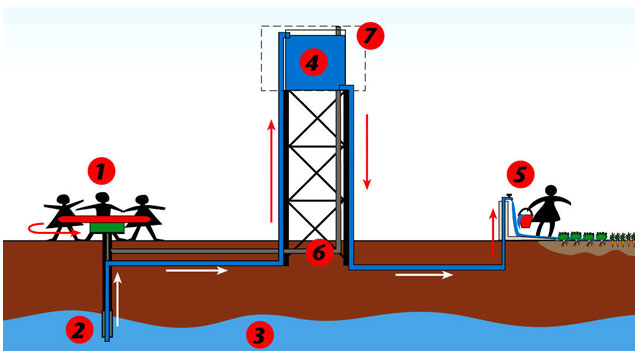
Clean water is a problem for some countries, mainly in Africa. In my last post about water there is a link to a documentary called FLOW. For 4 or 5 seconds a guy mention something about a playpump. So I decided to know a little bit more about that idea. Roundabout Water Solutions, who has an agreement with the South African Department of Water Affairs and the Governments of Malawi, Lesotho and Swaziland, is raising donor funds to supply rural communities, with clean drinking water, by means a sustainable pumping system, called a PlayPump, that is powered by the play of children.

PlayPump

Ideas like that to help small communities are more than welcome as in How Solar Energy Empowered a Nicaraguan Community Once Devastated by War. However there are some disadvantages as mentioned by this report released by UNICEF in 2007. For example the pumps cost around $14 000 which are more expensive than traditional pumps. Also a Playpump could theoretically provide the bare minimum water requirements for about 200 people a day based on two hours’ constant “play” every day[1]. It is a great idea but it is not to solve to problem the intention is to mitigate it. Of course the costs should be lower than that.

via (read more in) Welcome to Roundabout Water Solutions.

There’s nothing quite like renewables: Natural gas production will not reduce future greenhouse gas emissions as hoped

jptrinastic's avatarGood Night Earth

Appropriate and useful climate policy-making requires accurate and reliable data about the future.  Nowhere is this more important than when setting carbon emission standards and projecting percentages of each energy source to match energy needs (coal, natural gas, nuclear, renewables, etc.).  But projecting how emissions will change in the decades to come, say to meet the 2030 standards, is a tricky business.  In particular, natural gas has been touted as a ‘bridge’ to a low-carbon future with predictions that it would take over a share of energy production from coal and thereby reduce net emissions (natural gas has about a fourth of the greenhouse potential of coal, if you take away methane leaks in transportation pipes).

But is this really true?  Does the data back this up?  These are the key questions policymakers must know the answer to when deciding whether to promote natural gas expansion with subsidies, etc.  And it falls…

View original post 801 more words

And the Water Pollution Continues…

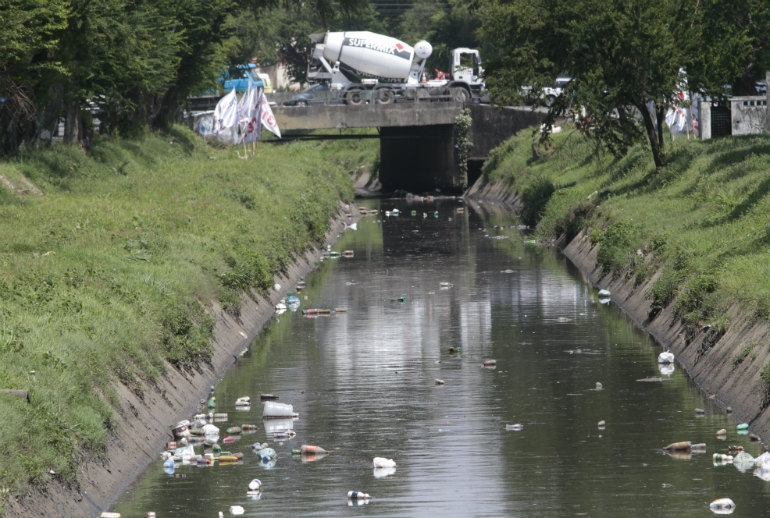
Do you remember the post about China and Brazil water pollution? The newspaper which before reported the problem returned to the same place 10 months later . Do you want know how is the place now? Take a look:

Image Credit: Guga Matos/ JC Imagem

For me what is more disturbing are the flags on the sides. The flags are electoral propaganda. Yeah it is time for new elections. The candidate paid someone to put the flags there because it is a really busy area.

Image Credit: Guga Matos/ JC Imagem

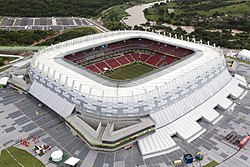
Is this a poor place? Well, it is hard to say because it was one of the host cities during the world cup. World cup host cities are not chosen randomly. They are normally big cities with infrastructure. Yes, there is infrastructure. Just take a look at the stadium they built for the world cup called arena pernambuco:

Arena pernambuco. Foto credit: Sergio Dutra.

Arena pernambuco. Foto credit: Portal da copa

What? It doesn’t make any sense. In addition one of the biggest soccer stadiums in Brazil is located not only in the same city but in the same neighbourhood of the polluted water channel.

Arruda Stadium. Image credit: Jrnicolas

However the stadium didn’t fit in the fifa standard so the government decided to build a new one (instead of renovate the old big stadium) . Stadiums and world cup are the priorities now of the governments but in the future when water will be a value commodity the priority is likely to change. Check this documentary called FLOW for love of water:

Irena Salina’s award-winning documentary investigation into what experts label the most important political and environmental issue of the 21st Century – The World Water Crisis. Salina builds a case against the growing privatization of the world’s dwindling fresh water supply with an unflinching focus on politics, pollution, human rights, and the emergence of a domineering world water cartel. Interviews with scientists and activists intelligently reveal the rapidly building crisis, at both the global and human scale, and the film introduces many of the governmental and corporate culprits behind the water grab, while begging the question “CAN ANYONE REALLY OWN WATER?”